


Many people ask the same question when planning their future: what is the best language to learn for jobs? Well, with businesses hiring across borders, good language skills can open doors that might otherwise stay closed. According to the the Future of Jobs Report 2025 by the World Economic Forum, the global labour market is undergoing rapid transformation, with 170 million new jobs expected to be created by 2030 as industries evolve and companies expand internationally. This means that the ability to communicate in multiple languages is becoming an increasingly valuable professional skill.
Learning another language is one of the best ways to improve your job prospects. You can even start today with flexible online language courses that allow you to build skills from home. You can also ramp up your international professional mobility as it becomes easier to work across cultures. In this guide I will explore what are the most useful languages to learn based on global demand, industry needs, and career opportunities. I will delve into how to choose the best language to learn depending on your career goals, whether you want to work in business, technology, travel, or international organisations.
Key Takeaways:
- Learning a second language can expand job opportunities in global industries.
- Some of the most useful languages to learn are linked to strong economies and international trade.
- Languages such as Mandarin, Spanish, German, and French are widely used in global workplaces.
- The best language to learn for jobs depends on your career field and where you want to work.
- Choosing the right language can help improve employability and open international career paths.
Why Learning Another Language Can Improve Your Career
Language skills are increasingly valued in workplaces that operate across borders. After all most businesses today work with international clients, suppliers, and teams every day.
Just to put this into perspective, one research done by the University of Portsmouth in the UK found that language skills continue to be highly valued by employers. Their analysis of 619 job vacancies found that roles requiring a second language exist across sectors including finance, technology, marketing, and customer service.
The study also found that German, French, Spanish, and Italian are the most sought languages in job postings.
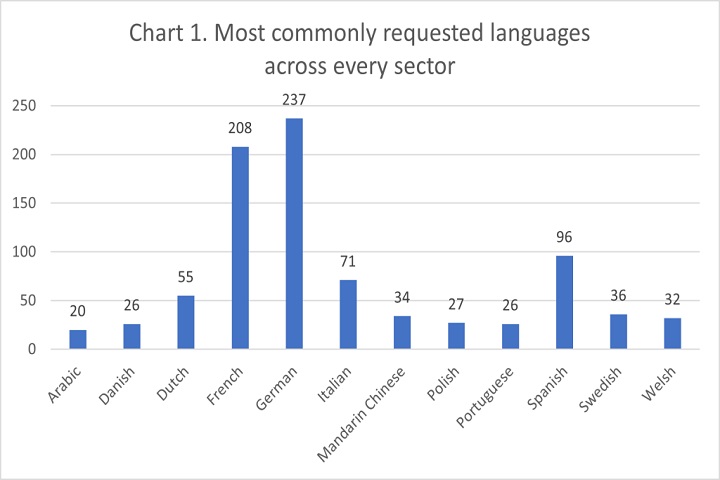
Source: Rodríguez de Céspedes, B. (2022). Language skills still needed in the UK’s job market. University of Portsmouth.
As a multilingual you can become a useful resource for organisations looking to connect with global markets and customers.
If you’re thinking about starting this journey, it is worth remembering why it’s never too late to learn a language. Yes, language learning is possible at any stage of your life whether you are a student or at any stage of your professional career!
Career Benefits of Learning a Second Language
- Access to international job opportunities
- Better communication with global teams and clients
- Increased chances of working abroad
- Greater understanding of different cultures and markets
- Improved competitiveness in the job market
Many careers actively benefit from language skills. Some examples include:
- International business and trade
- Tourism and hospitality
- Healthcare services in multicultural communities
- Diplomatic and government roles
- Technology companies working with international teams
What Makes a Language Useful to Learn?
If you are wondering what are the most useful languages to learn, it is important that you keep an eye on a number of key factors. Remember that from a career perspective, language only becomes invaluable when it connects to a demographic with a large population, strong economies, or industries with global demand.
Here are some of the key factors will help you find the best language to learn for your career goals:
Factors That Influence Language Value
Number of speakers worldwide
Languages spoken by large populations tend to create more communication opportunities in business and travel.
Economic influence of regions
Languages linked to strong economies will often offer you more career opportunities in the global market
Industry demand
There are also languages that are now widely used in sectors such as manufacturing, technology, tourism, or international relations.
International business presence
Companies operating across multiple countries are often looking for employees who speak multiple languages in the areas they operate in.
Global mobility opportunities
Languages spoken in many countries can support careers that involve relocation or international collaboration.
These factors more or less explain why some languages appear more frequently in international job markets than others.
Here is a table highlighting some of the languages commonly associated with international business and career opportunities.
| Language | Approximate Global Reach | Common Job Sectors |
| Mandarin Chinese | Largest native speaker population | Trade, manufacturing, technology |
| Spanish | Widely spoken across the Americas | Tourism, healthcare, business |
| German | Major European economic language | Engineering, automotive, manufacturing |
| French | Spoken across multiple continents | Diplomacy, NGOs, international organisations |
| Arabic | Widely used in Middle East and North Africa | Energy, international relations |
| Japanese | Language of major global corporations | Technology, robotics, automotive |
You might have noticed that these languages often appear in discussions about the best language to learn for jobs. They connect to strong global markets and industries.
Let’s expound more on some of the most popular ones you can choose to learn:
1. Mandarin Chinese
Mandarin Chinese is often considered one of the best language to learn for jobs owing to its growing global economic influence as China becomes a power house in international trade, manufacturing, and supply chains. In fact, China is now the top import partner for around 40% of countries, including nearly all of Asia, much of Africa, and parts of Europe.
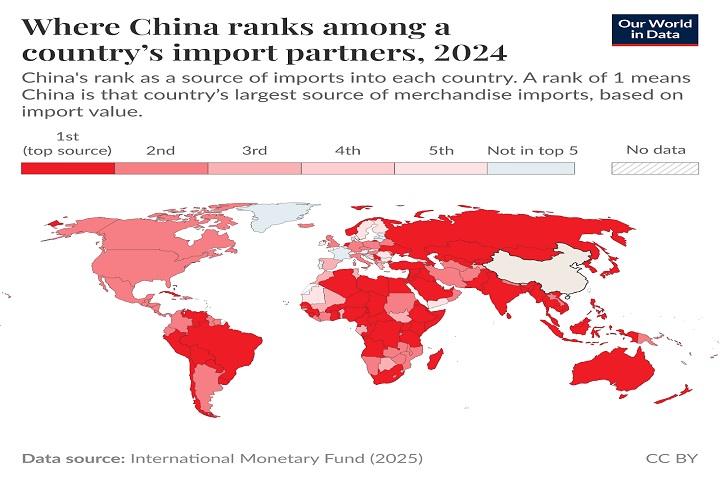
Source: Our World in Data / International Monetary Fund (2025)
According to the UK overseas trade in goods statistics from HM Revenue & Customs, China rose to the UK’s fourth-largest export partner, with exports increasing by £923 million in 2026 compared with the previous month and by £1.3 billion compared with January 2025.
This is why companies working with Chinese partners value employees who can communicate in Mandarin.
Why Mandarin is Useful for Careers
- Largest native speaking population in the world
- Widely used in global manufacturing and trade networks
- Increasing influence in technology and digital industries
- Helpful for businesses working with Chinese suppliers and markets
Industries Where Mandarin Skills Are Valuable
- International trade and logistics
- Manufacturing and supply chain management
- Technology and telecommunications
- Finance and global business consulting
So, if you are looking to work in international companies, you may find Mandarin to be one of the most useful languages to learn for global business environments.
2. Spanish
Spanish is another one of the most widely spoken languages worldwide. It is used across many countries in Europe, North America, and South America thus it comes in quite handy in international communication.
According to an OECD Working Paper analyzing online job vacancies across 27 EU countries and the UK in 2021, knowledge of Spanish was explicitly demanded in 1–2% of vacancies, alongside German, French, and Mandarin. While English remains the most commonly required language in the region, the study highlights that proficiency in additional languages like Spanish can open doors to professional opportunities in Europe, particularly in managerial and professional roles.
Why Spanish Is Valuable
- Spoken in more than 20 countries
- Common language across large parts of the Americas
- Widely used in international tourism and travel industries
Industries Where Spanish Skills Are Valuable
- Tourism and hospitality roles
- Healthcare professionals working with Spanish-speaking communities
- International business and trade
- Education and language teaching
Because of its wide geographic reach, Spanish Courses often appears on lists of useful languages to learn for people working in global environments.
3. German
German is also growing as an important business language around the world more so in the European job market. For one, Germany has one of the largest economies in Europe particularly when it comes to sectors like engineering, manufacturing, and automotive industries.

Why German Is Useful for Careers
- Language of a major European economic centre
- Commonly used in engineering and industrial sectors
- Strong presence in international manufacturing companies
Industries That Value German Language Skills
- Automotive manufacturing
- Mechanical and electrical engineering
- International business within Europe
- Scientific research and innovation
Professionals working with European companies may find an online German course useful for career development in technical industries.
4. French
French is spoken across multiple continents, including Europe, Africa, and parts of North America. Owing to this global presence, it remains an important language for international communication.
Global Use of French
French is often used in many international organisations and diplomatic settings. It is also one of the official languages of several global institutions.
Career Opportunities Linked to French
- International development organisations
- Diplomatic and government roles
- NGOs and humanitarian agencies
- Global education and research programmes
French often comes up in conversations on what are the most useful languages to learn for international careers, and taking a French language course can help you build practical speaking skills for global workplaces.
5. Arabic
Arabic is spoken across a large region that includes the Middle East and North Africa. These regions play an important role in global energy markets and international relations.
Why Arabic Is Valuable
- Spoken across many countries
- Important language for global energy industries
- Widely used in diplomatic and international policy discussions
Career Fields That Use Arabic
- International relations and diplomacy
- Energy sector roles
- Global development programmes
- Security and intelligence services
For professionals working in international policy or energy industries, Arabic can be a useful language to learn for building specialised expertise.
6. Japanese
Japan remains one of the most technologically advanced economies in the world. Many top global companies originate from Japan and operate internationally.
Why Japanese Is Valuable for Careers
- Strong global reputation in technology and robotics
- Home to large multinational corporations
- Important language in advanced manufacturing sectors
Industries Linked to Japanese
- Automotive manufacturing
- Robotics and automation
- Consumer electronics
- International technology companies
Although it requires dedication to learn, Japanese can be the best language to learn for jobs in certain technology and manufacturing fields.
Other Useful Languages Worth Considering
While the languages I have mentioned above dominate global rankings, several other languages can also provide career benefits depending on your industry.
| Language | Regional Importance | Career Sectors |
| Portuguese | Brazil and Portugal | Trade, tourism, international business |
| Korean | South Korea’s technology sector | Electronics, gaming, manufacturing |
| Hindi | Large population and growing economy | Business, international relations |
| Russian | Eastern Europe and Central Asia | Energy, security, diplomacy |
These languages may not always appear at the top of global lists, but they can still be useful languages to learn depending on where you plan to work.
How to Choose the Best Language for Your Career Goals
Many people ask what the best language to learn is. The simple answer is that it depends on your personal goals and career plans. For example, If you are working in the European automobile industry, learning German can be a significant career advantage. Many of Europe’s largest automotive manufacturers are based in Germany, including companies like BMW, Volkswagen Group, and Mercedes-Benz Group.
In such a sector German is still widely used in engineering environments, supplier networks, and day-to-day operations. Professionals who can communicate in German often find it easier to collaborate with local teams, access more job opportunities, and build stronger relationships within the industry.
Remember that different industries value different languages. I recommend picking a language that matches both your professional interests and the regions where you want to work.
Checklist: Choosing the Right Language
I recommend considering these factors or rather aspects as you think about best language to learn for jobs.
- Career industry – Again, remember that some sectors will often require specific language skills
- Job market demand – Take some time to research which languages appear in job listings in fields you are looking to venture into.
- Regional career goals – Think about the places you intend to work internationally
- Personal motivation – It also helps if you have an interest in the culture tied to the language as it can make learning easier
In other words, take time and pick the right language that will add value to your personal and professional benefits beyond employment. You can explore more of the advantages you will gain in our Benefits of Learning a Language guide.
Start Learning with Flexible Study Options
If you are ready to begin, the best place to start is to explore structured learning programmes that can help you build language skills at your own pace. You could start with our Online Language Courses that allow flexible study from home.
You can also explore specific courses such as the French all Talk course or the German all Talk course, which focus on practical conversation skills for real-world communication.
If you are looking to strengthen foundational communication skills then studying English Language GCSE can also support your academic and professional development.
Once you pick the right learning path it will certainly make language study much more manageable as you strive towards tapping international career opportunities.
Conclusion
In a nutshell, learning another language can open doors to new careers, international opportunities, and global industries. Languages such as Mandarin, Spanish, German, and French are widely known as some of the world’s most useful languages to learn for professional growth. However, the best language to learn for jobs depends on your career field and long-term goals. You simply need to pick a language that ticks all the boxes in terms of your interests and industry demand. This way you are bound to expand job prospects and build valuable communication skills for the future!
FAQs
What is the best language to learn for jobs?
The best language to learn for jobs depends on your career field and where you want to work. Languages such as Mandarin Chinese, Spanish, German, and French tend to have more value because they are used in global business, international organisations, and major economies. I would advise picking a language that resonates with your industry to increase the pool job opportunities you can access.
Which language is most useful worldwide?
Spanish and Mandarin Chinese are often considered among the most useful worldwide. Spanish is spoken across many countries in Europe and the Americas, while Mandarin Chinese has the largest number of native speakers and is widely used in global trade and manufacturing.
What language should I learn after English?
After English, many learners often go for German, Spanish or French because they are widely spoken internationally and commonly used in business, travel, and education. They are just a few of the most useful languages to learn due to their global reach and career relevance.
Best language to learn for future
Languages connected to growing economies and global industries are often seen as the best language to learn for future career opportunities. Mandarin Chinese, Spanish, Arabic, and German are also excellent options for careers in international business, technology, manufacturing, and trade.
Best languages to learn for government jobs
Languages such as Arabic, French, Russian, and Mandarin Chinese are often valuable for government roles. These languages are useful in diplomacy, international relations, intelligence work, and global development programmes where communication across cultures is required.
 Nick Cooper
 0
0 0
0 0
0